OpenCode Hit 208K Stars Because Developers Are Done With Vendor Lock-In
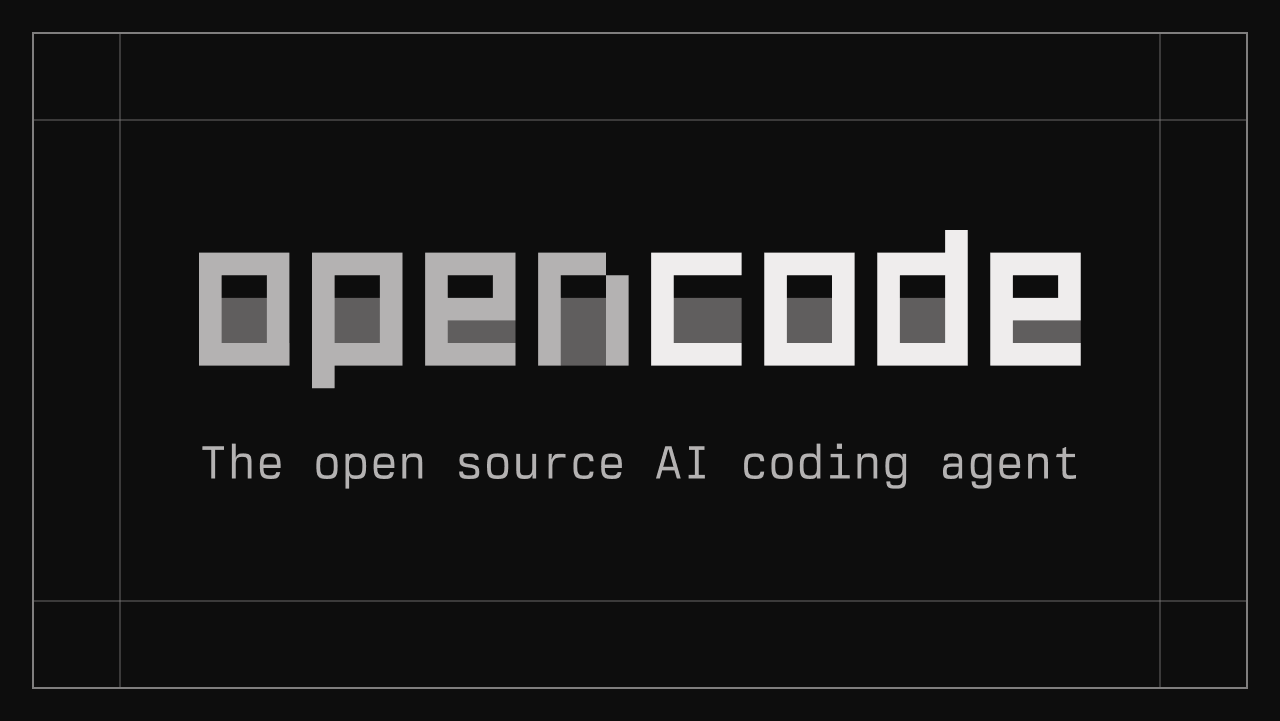
If you've been keeping an eye on the dev tools space this year, you already know things have been... chaotic. Between the SpaceX/Cursor acquisition drama and AI coding assistants becoming basically table stakes, it's been hard to keep up. But something quiet has been happening in the background that I think MERN stack devs especially need to pay attention to: OpenCode, an open-source AI coding agent, just crossed 208K GitHub stars. That's faster growth than React had in its early days.
So what's the deal, and should you actually care? Let me break it down.
What Even Is OpenCode?
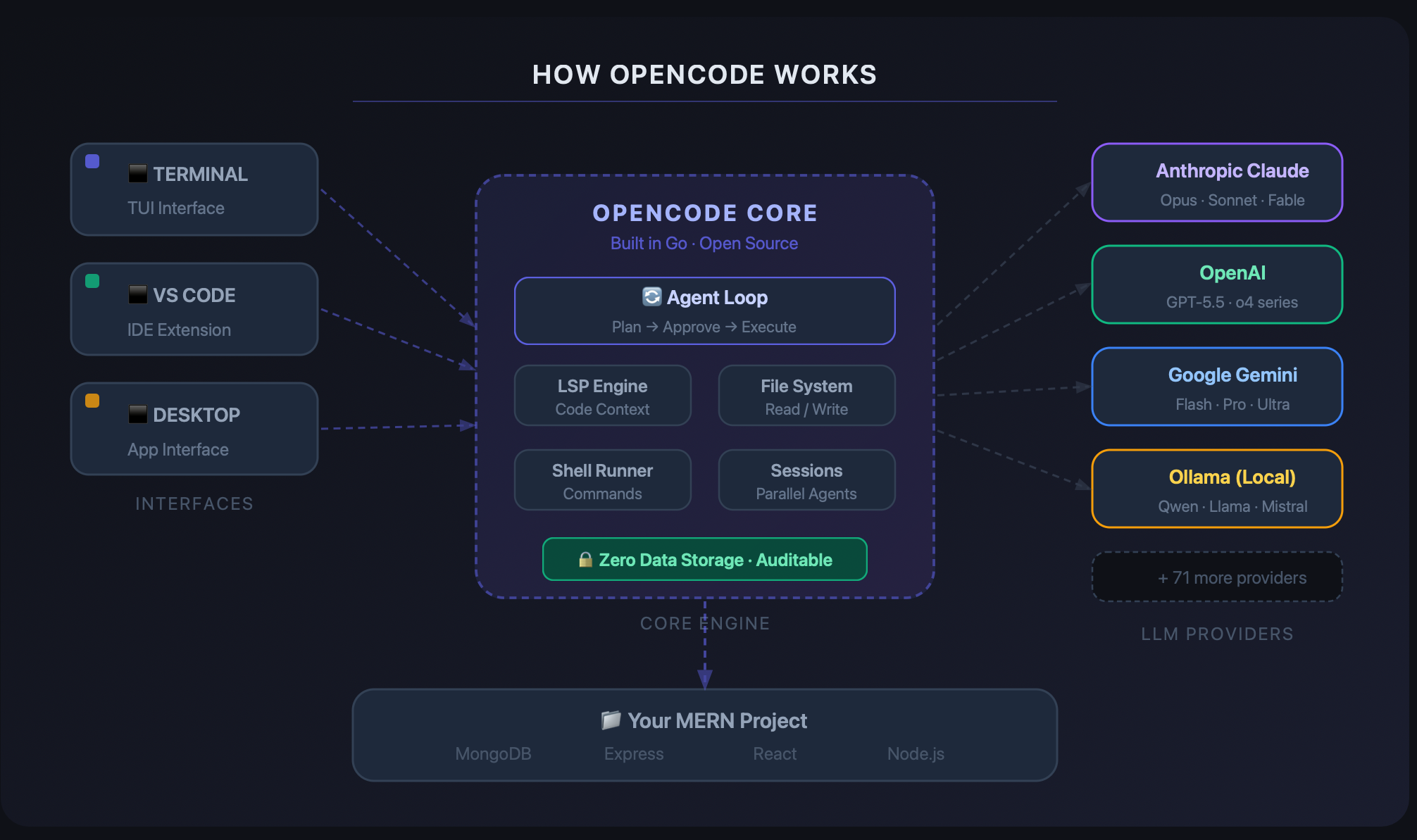
At its core, OpenCode is a terminal-first AI coding agent. It's not an IDE fork, not a browser extension, not another SaaS subscription — it runs in your terminal (or desktop or IDE, if you prefer), and it lets you point any LLM at your codebase to read files, write code, run shell commands, and handle multi-file refactors.
The part that makes it different from everything else on the market right now: it's model-agnostic. Like, actually model-agnostic. It supports 75+ providers out of the box — Anthropic Claude, OpenAI GPT, Google Gemini, AWS Bedrock, and even local models through Ollama. You bring your own API keys. You pick the model per task. You switch mid-session if you want.
Oh, and it's built in Go. Which makes it fast and stupidly portable. Just a single binary.
Why It Blew Up (And Why Now Makes Sense)
The timing here is not a coincidence. After SpaceX announced its $60B acquisition of Cursor back in June, a pretty significant chunk of the developer community started asking uncomfortable questions: What happens to my workflow if this thing gets absorbed into a defense contractor? Even if you weren't worried about that specifically, the acquisition was a reminder that proprietary tools can change direction at any moment.
OpenCode basically answered that question before it was fully formed. Open source, auditable, no vendor dependency, no "your code touches our servers" gray area. For teams working on anything sensitive — fintech, healthcare, internal tools with customer data — that's not a minor detail, it's a dealbreaker for the alternatives.
The 208K stars aren't just hype. The community has put in work: 950+ contributors, active plugin ecosystem, solid docs. This isn't vaporware.
Setting It Up on a MERN Project
Getting started is honestly pretty low-friction. Install it with:
# macOS / Linux
curl -fsSL https://opencode.ai/install | sh

# or via npm if you're living in JS land
npm install -g opencode-ai
Once installed, navigate to your project root and initialize:
cd your-mern-project
opencode
It auto-detects your repo structure and loads the right language server protocols. For a MERN project, that means it understands your Express routes, React components, and Mongoose models without you having to explain anything.
You can configure your preferred model in ~/.config/opencode/config.json:
{
  "model": "anthropic/claude-opus-4-8",
  "providers": {
    "anthropic": {
      "apiKey": "your-key-here"
    }
  },
  "theme": "dark",
  "autoApprove": false
}
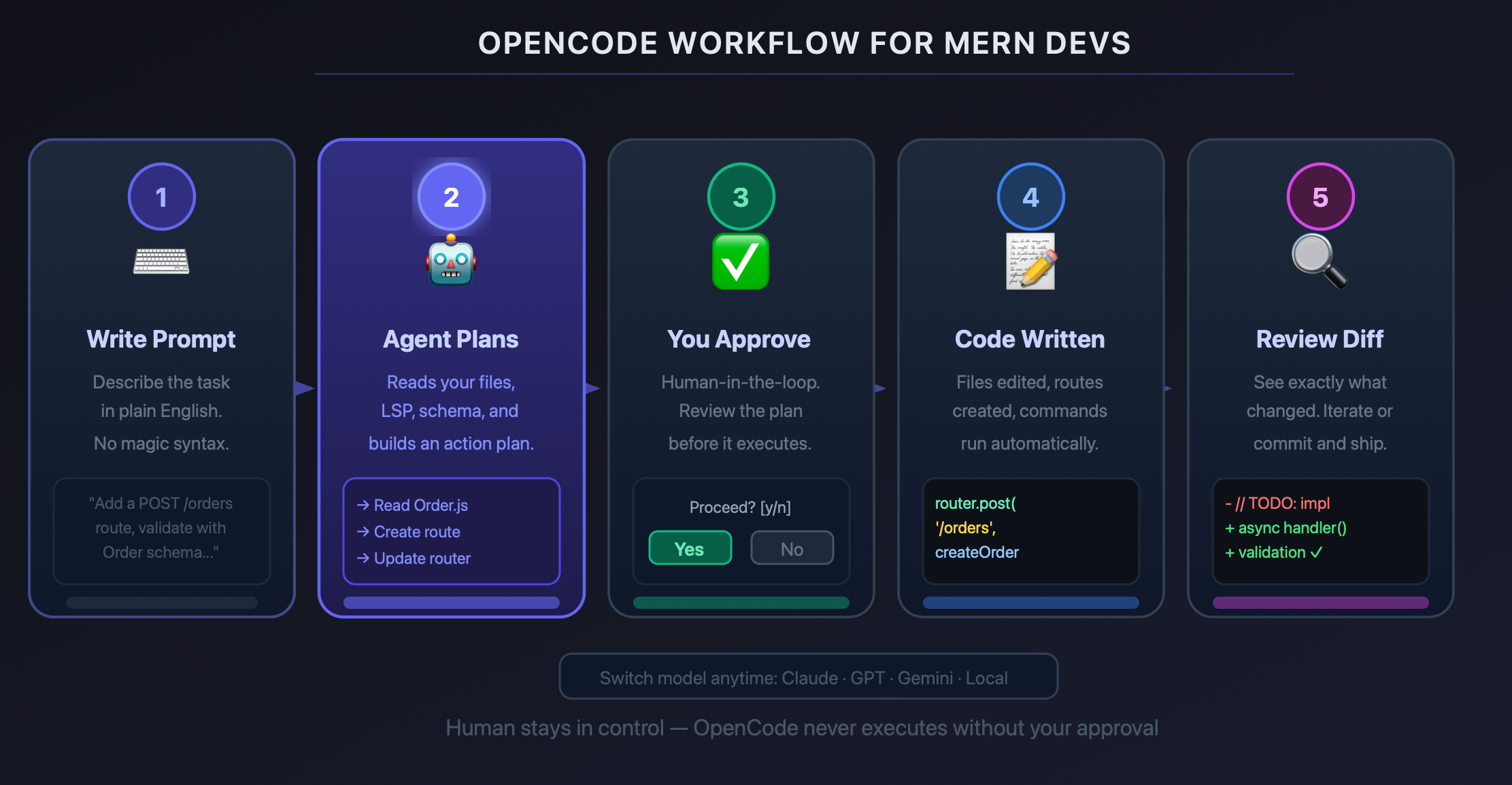
I keep autoApprove off. The human-in-the-loop review before it executes anything is one of the features I actually appreciate — it shows you the plan, you approve, then it goes. Especially useful when it's about to run a migration on your MongoDB collections.
The MERN Workflow That Actually Saves Time
Here's where it gets practical. OpenCode shines at the kind of multi-file tasks that are annoying to context-switch through manually. A few patterns I've found genuinely useful:
Scaffolding a new Express route with validation:
> Add a POST /api/orders route to routes/orders.js.
  It should validate the request body against the order schema in models/Order.js,
  save to MongoDB, and return the created order. Use async/await.
It reads the model file, understands the schema shape, writes the route, and updates the router index — in one go.
Refactoring React components to use a shared hook:
> Extract the auth state logic from Header.jsx, Sidebar.jsx, and Dashboard.jsx
  into a shared useAuth hook. Don't break the existing prop interfaces.
This is the kind of refactor that takes an hour to do carefully by hand. OpenCode handles it in a few seconds and shows you a diff before touching anything.
Debugging a specific API response:
> The /api/users/:id endpoint is returning 500 when the user doesn't exist.
  Find the issue and fix it with a proper 404 response.
It traces the route → controller → error handler chain and patches just what needs patching.
The Local Model Angle (For the Privacy-Conscious)
If you're working on a client project with strict data handling requirements, the local model support is actually a game changer. With Ollama running locally:
# Pull a capable coding model
ollama pull qwen2.5-coder:32b

# Point OpenCode at it
opencode --model ollama/qwen2.5-coder:32b
Your code never leaves your machine. Full stop. For anything involving user PII or proprietary business logic, this matters.
The trade-off is obvious — local models are slower and less capable than frontier models. But for boilerplate generation, documentation, and straightforward refactors, a good local model is more than enough.
What It's Not Great At (Honesty Tax)
A few things to be realistic about:
OpenCode is terminal-first, which means the UX ceiling is lower than a full IDE like Cursor for things like inline completions and visual diff viewing. If you're someone who lives in VS Code's GUI, the learning curve is real.
Also, being model-agnostic means you get what you pay for from the model. OpenCode doesn't do any magic prompt engineering on top — the quality of the output is directly tied to which model you're pointing it at. Claude Opus and GPT-5.5 produce noticeably better results than budget models for complex refactors.
And the parallel sessions feature (running multiple agents simultaneously on the same project) is powerful but can get chaotic if you're not organized about it. Manage your branches.
Should You Switch?
Honestly? Try it alongside whatever you're using now. The install is painless, it costs nothing to experiment, and the workflow fits naturally into a terminal-heavy MERN dev setup. If you're already paying for Claude Pro or an OpenAI subscription, you can literally just plug in your existing API key and get going — no new subscription, no seat licensing.
The broader point here is that the "open source wins by being trustworthy when the alternatives feel uncertain" story isn't new — we've seen it with databases, with Linux, with Git. It's playing out again with AI tooling. OpenCode is a very early sign of where that's heading.
Give it a shot. Your terminal will thank you.
Have you tried OpenCode on a real project? What model are you running it with? Drop your setup in the comments — I'm curious what's working for people.